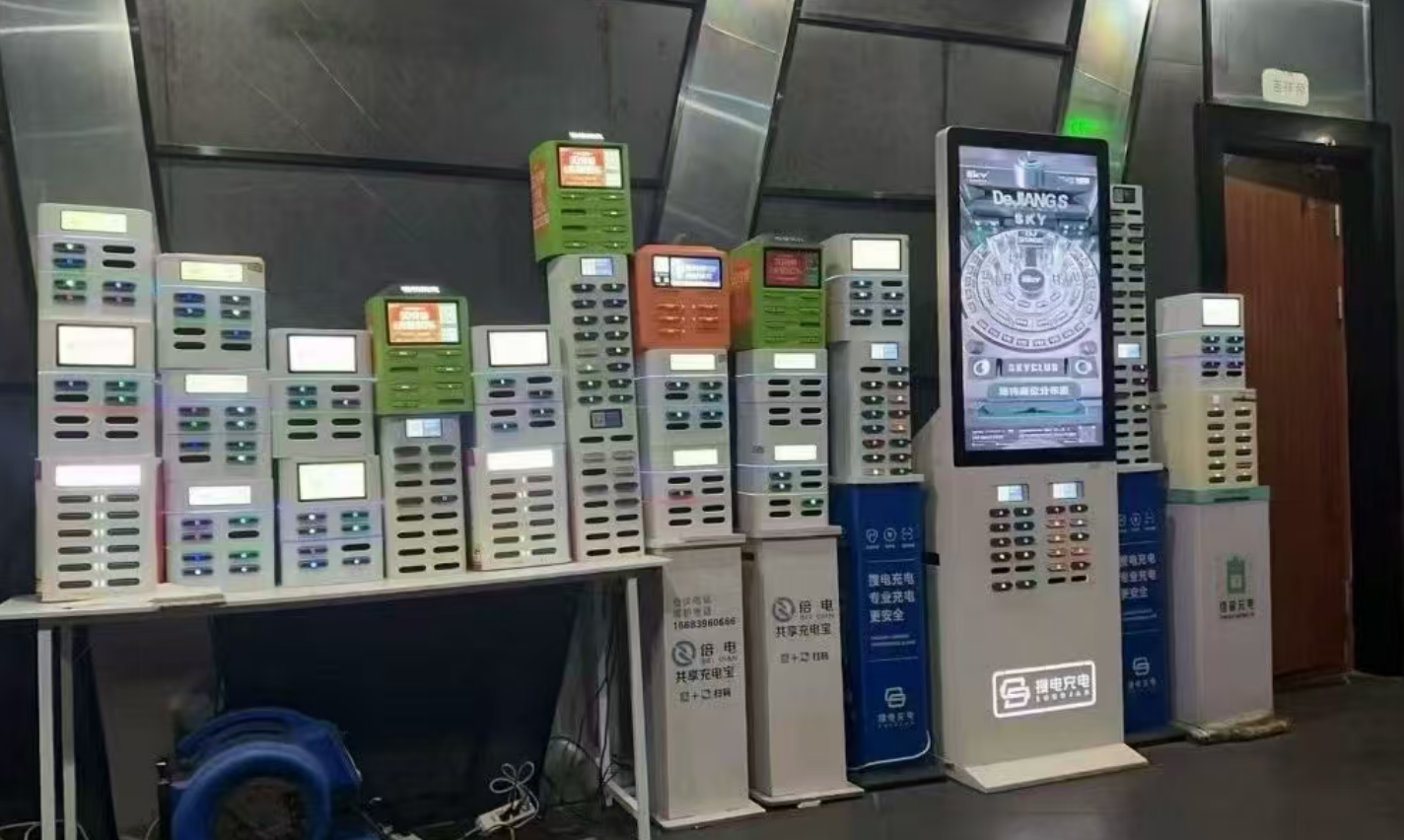
🎯 The Reality Check
When people first encounter the shared power bank industry, their intuition is usually the same:
"Isn't this business just about placing devices, having users scan to rent, and collecting fees?"
This understanding isn't wrong.
But if you stop here, you're already heading in the wrong direction.
Because the reality is:
❌ Almost everyone who only thinks in "rental terms" ends up losing money
Those who actually profit saw one thing clearly from the start:
🎯 Shared power banks are not a "rental business" — they're a "multi-layer revenue structure for offline cash flow"
💰 The 6 Revenue Streams
Based on real industry models, this business has at least 6 sources of revenue:
Layer 1: Rental Revenue (The Foundation — But Don't Rely on It Alone)
This is the most straightforward layer: User scans → Rent battery → Pay by time.
This is the starting point for all revenue. But there's a critical industry insight here:
⚠️ Rental fees are NOT the core profit — they're a cash flow gateway
| Cost Item | Impact |
|---|---|
| 🏭 Hardware Costs | Equipment procurement, maintenance, depreciation |
| 🤝 Merchant Split | Typically 30%–50% of revenue |
| 💳 Payment Processing | Transaction gateway fees per transaction |
🔑 Usage Rate = The Lifeline of This Business
If your devices aren't being used, no amount of rental revenue will save you.
Layer 2: Hardware Margin from Agents (The Overlooked Layer)
💡 Turn "operational capability" into a "replicable product"
Layer 3: Agent Platform Service Fee (10%–20%) — Core Recurring Revenue
| Characteristic | Description |
|---|---|
| ♻️ Sustainable | Continuously generated with every transaction |
| 📈 Scalable | Grows with agent network |
| 🌐 Network Effect | Bigger network = more stable revenue |
🏆 You're Not Selling Devices — You're Building a Platform
Layer 4: Platform Advertising Revenue (The Multiplier After Scale)
Once your device network reaches a certain scale, you own something valuable:
💡 Real Offline Traffic → Turn "Devices" into "Media"
- 📊 Screen advertising
- 🎯 Campaign promotions
- 🤝 Brand partnerships
Layer 5: Horizontal Expansion After Scale (The Real Ceiling)
When your network is running, what you really own is:
You can extend into:
Layer 6: Capital沉淀 (10%–20%) — The Most Underestimated Layer
Based on real China experience: capital沉淀 can account for approximately 15% of total revenue.
💡 This is a "financial attribute" that can be amplified
🎯 In summary: You're not making money from rental fees — you're making money from "cash flow structure"
❌ Why Do 90% of People Fail?
| Wrong Behavior | Result |
|---|---|
| Only focusing on devices | Ignores the core role of operations |
| No operational support | Devices exist but nobody uses them |
| No localization | Users can't even complete payment |
| Ignoring merchants | Poor placement, no recommendations |
| Not analyzing data | Can't optimize, continuous losses |
⚠️ It's Not "The Market Doesn't Work" — It's "You Didn't Build the Business Correctly"
🛠️ What Capabilities Do You Need?
This part is the key to determining whether you can make money. Here's the breakdown to the most practical level.
Capability 1: Localization (The Lifeline)
| Dimension | Key Differences |
|---|---|
| 💳 Payment Systems | GrabPay / DANA / PromptPay / GCash |
| 📱 User Habits | Scanning behavior, peak hours, decision paths |
| 📡 Communication | SIM card dependency, Wi-Fi coverage |
Capability 2: Operations (Determines Profitability)
Capability 3: Team Management (Core After Scale)
| Scale | Core Challenge |
|---|---|
| 50 units | Prove the model yourself |
| 500 units | BDs sign bad venues, ops teams on fire |
| 5000 units | Nobody reads data, nobody manages merchants |
Capability 4: Channel Management (Determines Expansion Speed)
❌ Otherwise: The market gets destroyed by your own people
Capability 5: Merchant Management (Underestimated but Critical)
💡 Merchants are your "first touchpoint"
Merchant doesn't cooperate → Doesn't remind users → Poor placement → Directly impacts usage rate
Capability 6: System Capability (Determines Efficiency & Ceiling)
| System Function | Impact Metric |
|---|---|
| Payment flow | Payment success rate |
| User interface | First-rent conversion rate |
| Data dashboard | Operational decision efficiency |
Capability 7: Offline Resources (Determines Whether You Can Launch)
❌ Without resources, it's hard to start
Capability 8: Execution (The Most Realistic One)
Need to: Visit venues, maintain devices, handle issues, continuously optimize
❌ Without execution, everything equals zero
Capability 9: 0-1 Strategy (The Easiest Pitfall)
| Wrong Approach | Consequence |
|---|---|
| ❌ Invest too little | Can't validate, insufficient data |
| ❌ Invest too much | Can't control, risk goes unchecked |
✅ Build a "small-scale network that forms a network" → Validate usage rate → Prove the model → Then expand
🏆 The Most Important Point
If you've read this far, you should understand:
It's essentially a combination of:
🌐 Offline Traffic 💳 Payment Access 🏪 Merchant Network 👥 User Operations
❌ We're not selling shared power bank devices
✅ We're helping clients build an offline cash flow system that can continuously make money overseas